Journal · Studio Notes
Sister Sciences, Separate Thresholds: The Journey to Ming Acupuncture
August 6, 2026 · 5 min read
There are practices we discover, and practices we return to. For Federica Mingotti, Ming Acupuncture is a return to the medicine that first taught her to see the body as a living system — with The Regenerative Studio as its sister science.
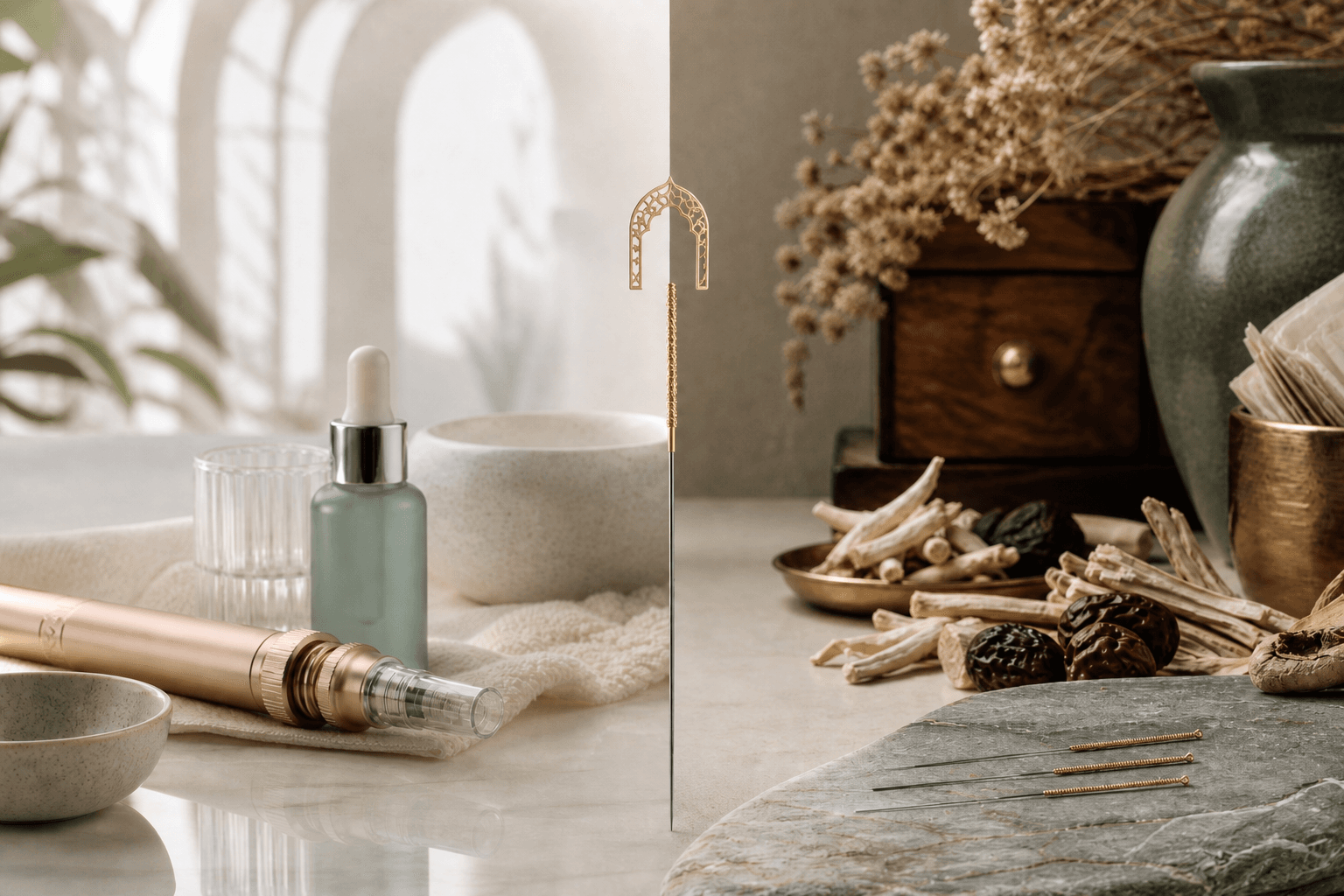
There are practices we discover, and practices we return to.
For Federica Mingotti, Ming Acupuncture is a return to the medicine that first taught her to see the body not as a collection of symptoms, but as a living system — always adapting, communicating, compensating, and seeking its way back toward balance.
Her path began long before there was a practice with her name on the door.
It began in Italy, with an early curiosity about natural medicine and the relationship between how we live and how we feel. It continued through naturopathic study, massage therapy, and eventually a Master of Science in Acupuncture and Chinese Herbal Medicine.
Along the way came another kind of education: years spent in the corporate world, experiencing firsthand how modern life can gradually separate people from their bodies.
Long hours. Sustained stress. Interrupted sleep. Tension that becomes normal. Signals we learn to ignore until the body makes them impossible to overlook.
That experience changed the way Federica understood care.
Learning to listen differently
Chinese medicine begins from a different premise than much of modern life: the body is not an obstacle to overcome. It is information.
Pain carries information. So do digestion, sleep, movement, temperature, energy, stress, the menstrual cycle, and the subtle changes people often dismiss because they do not yet seem significant enough to address.
Acupuncture gave Federica a framework for listening to those relationships.
Rather than asking only, Where does it hurt?, the practice creates space for a wider question:
What is the body trying to tell us?
That question has followed her throughout her clinical work.
It is present when someone arrives with persistent pain or restricted movement. It is present in conversations about digestion, fertility, pelvic health, stress, sleep, or vitality. And it is present in the quieter work of helping someone reconnect with a body they may have spent years overriding.
The objective is not simply the absence of a symptom.
It is the restoration of function — and, over time, the cultivation of greater resilience.
A practice that continued to evolve
As Federica’s clinical work developed, so did the ways she could support the body’s regenerative capacity.
Microneedling entered that journey later.
At first glance, acupuncture and microneedling can appear to belong to different worlds. One is associated with traditional Chinese medicine and whole-body regulation; the other with contemporary skin care and collagen induction.
Federica saw a deeper relationship.
Both ask what can happen when the body is given an intentional stimulus and the conditions to respond.
Both depend on process rather than instant transformation.
Both respect the body’s capacity for repair.
And both require something increasingly uncommon in modern wellness: patience.
This became the foundation for two sister sciences within Federica’s work.
Ming Acupuncture expresses the broader integrative medicine practice — acupuncture, Chinese medicine, herbal and food-energetics perspectives, movement, regulation, and whole-person care.
The Regenerative Studio grew from a more focused exploration of regeneration through the skin, with microneedling practiced as a paced clinical journey rather than a one-time beauty treatment.
They share a practitioner and a philosophy of care.
But they invite people into that care through different thresholds.
Sister sciences, separate thresholds
A threshold is more than a doorway.
It marks the moment we choose to enter into a different relationship with something.
For some people, that threshold begins with pain.
For others, exhaustion.
For others, fertility, digestion, sleep, stress, or the sense that their body simply isn’t functioning the way it once did.
And sometimes the threshold is visible on the surface — changing skin, scarring, signs of aging, or a desire to support the body’s regenerative processes differently.
There does not need to be one doorway for all of those experiences.
There needs to be a clear one.
That is why Ming Acupuncture and The Regenerative Studio exist alongside one another.
Not as competing identities, but as distinct expressions of a larger idea:
Care should begin by meeting the person where they are.
The meaning of Ming
Ming Acupuncture carries Federica’s name, but it also carries the accumulated path that brought her here.
The student of natural medicine in Italy.
The massage therapist learning through touch.
The practitioner studying acupuncture and Chinese herbal medicine.
The professional who experienced the physiological cost of sustained stress.
The clinician who later began exploring regenerative microneedling.
Each chapter added another way of seeing the same thing: human health is dynamic.
We are continually responding to our environments, our habits, our histories, our relationships, our stressors, and the ways we care for ourselves.
Medicine, at its best, helps us participate more intelligently in that process.
That is the practice Ming Acupuncture is returning to.
Not a new beginning.
A deeper continuation.
Restore function. Build lasting vitality.
For Federica, those words describe more than an acupuncture treatment. They describe a philosophy: listen carefully, work with the body’s own intelligence, and create the conditions through which meaningful change can take root.
Two sister sciences.
Two thresholds.
One evolving practice of regeneration.
If acupuncture and integrative Chinese medicine are what you need, call Health Link at 804-559-6818 and ask for Ming Acupuncture. Explore services, read what to expect, or visit the About page to learn more.
Read the Regenerative Studio side of this story at Sister Sciences, Separate Thresholds on theregenerativestudio.com.
For how the practice architecture took shape — one practitioner, two expressions of care — read When a Practice Becomes More Than One Thing.
Educational practice note. Not personalized medical advice.
Information on this website is educational and does not constitute medical diagnosis or personalized medical advice. Results vary. Acupuncture and related services do not replace emergency care or necessary conventional medical evaluation. In an emergency, call 911 or go to the nearest emergency department.
Recommended reading
Further study from The Ming Library — curated titles with editorial rationale, not a generic shopping list.
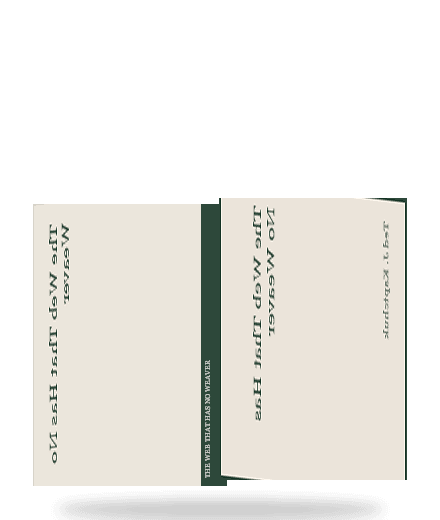
The Web That Has No Weaver
Ted J. Kaptchuk
Probably the strongest intellectual foundation for Ming’s Journal — it helps patients see pattern and relationship rather than isolated symptoms.
Tap the book to view on Amazon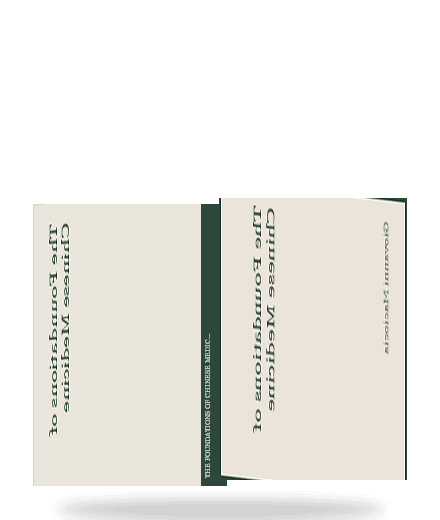
The Foundations of Chinese Medicine
Giovanni Maciocia
Behind-the-scenes rigor when developing educational material — not primary patient reading, but it keeps Ming’s teaching clinically grounded.
Tap the book to view on Amazon
Amazon links are for convenient ordering. We may earn from qualifying purchases.
Explore the full Library